Trump Rolls Out 100% Tariff on Branded Pharma — But Offers U.S. Build-Here Exception
 Facebook
 Twitter
 LinkedIn
 WhatsApp
Summary: Trump to tax branded drugs 100% from October 1, unless firms are building U.S. manufacturing facilities.
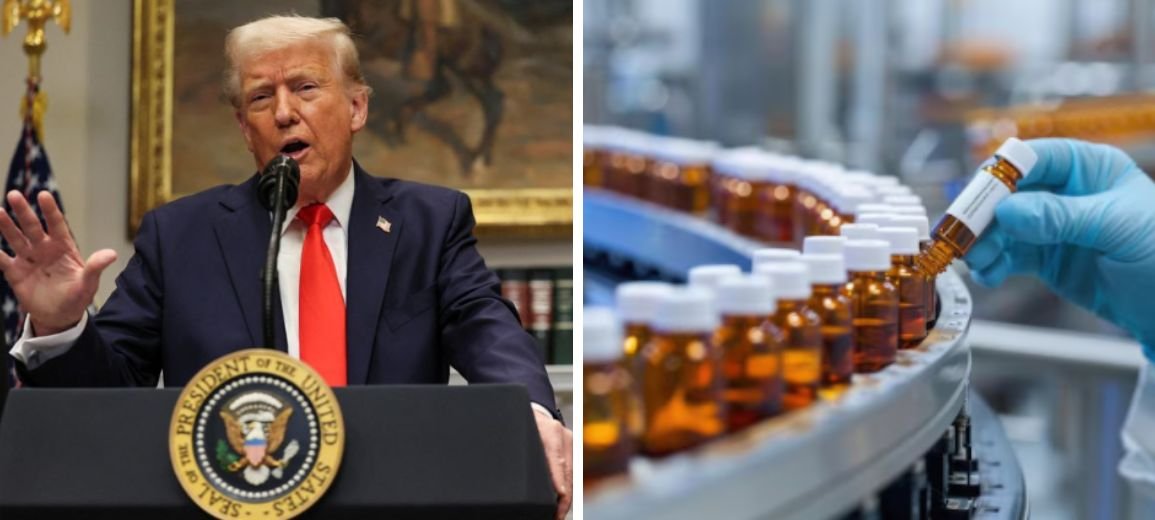
In a sweeping trade move announced September 25, 2025, U.S. President Donald Trump declared that starting October 1, a 100 percent tariff will be imposed on branded and patented pharmaceutical products imported into the U.S. However, companies that have begun construction on drug manufacturing plants in the United States will be exempted from this tariff.
Here’s the tariff list from Trump’s announcement:
100% tariff – Branded drugs
25% tariff – Heavy-duty trucks
50% tariff – Kitchen cabinets & bathroom vanities
30% tariff – Upholstered furniture
Trump’s post on his platform, Truth Social, stated that “breaking ground” or being “under construction” in the U.S. would qualify a pharmaceutical company for the exception.
The announcement sent shockwaves through India’s pharmaceutical sector. The U.S. is a major destination for Indian drugmakers, especially for patented medicines. Indian pharma stocks reacted sharply: all 20 constituents of India’s pharma index slipped, with Sun Pharma alone dropping over 3 percent.
Analysts see the immediate impact as limited because India’s exports to the U.S. are largely generic drugs, which are not branded or patented. Yet concern is rising about whether future tariff measures might target more complex generics or biosimilars.
Still, this policy shift raises critical questions: will Indian firms accelerate plans for U.S. manufacturing? Will the tariff threaten drug pricing, supply chains, or global competitiveness? And how will the exemption clause be interpreted—especially for projects that are announced but not yet underway?
In the coming days, eyes will be on regulatory clarifications, reactions from pharma companies, and any diplomatic or trade counterpressure from India. The construction exception may soften the blow for some, but the broader message is clear: the U.S. wants more of its pharma supply to be made domestically.