India Successfully Tests Agni-Prime Missile from Rail-Based Mobile Launcher
 Facebook
 Twitter
 LinkedIn
 WhatsApp
Summary: India hits a major milestone with the first test of its rail-based Agni-Prime missile.
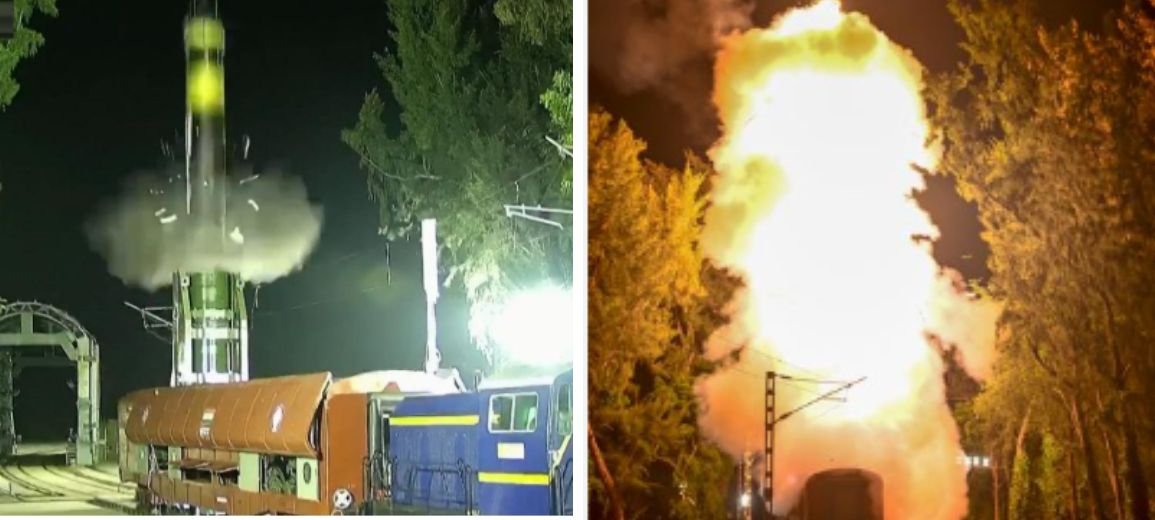
India has made a lot of progress in missile technology by using a rail-based mobile launcher to safely test the Agni-Prime. Defence Minister Rajnath Singh confirmed the launch, calling it a big leap for the country’s strategic defense plans.
What makes this test special is the mobility. Instead of a fixed launch site, the missile was fired from a launcher mounted on a regular railway wagon. This means the system can move anywhere along India’s rail network, making it quicker to deploy and much harder for adversaries to track.
The Agni-Prime, or Agni-P, is an advanced, solid-fuel missile with a range of about 2,000 kilometers. A canister system makes it portable, and a nimble re-entry vehicle improves accuracy. This places it neatly between India’s shorter and longer-range missiles, giving the military more flexible options in a crisis.
Defense experts say the success strengthens India’s deterrence strategy by improving the survivability of its missile forces and adding a layer of unpredictability to potential launch plans. It also highlights the country’s progress toward self-reliant defense technology.
This first rail-based trial is likely just the beginning. The focus now shifts to how quickly the Agni-Prime can move from testing to active service and what this new mobility means for the strategic balance in the region.