
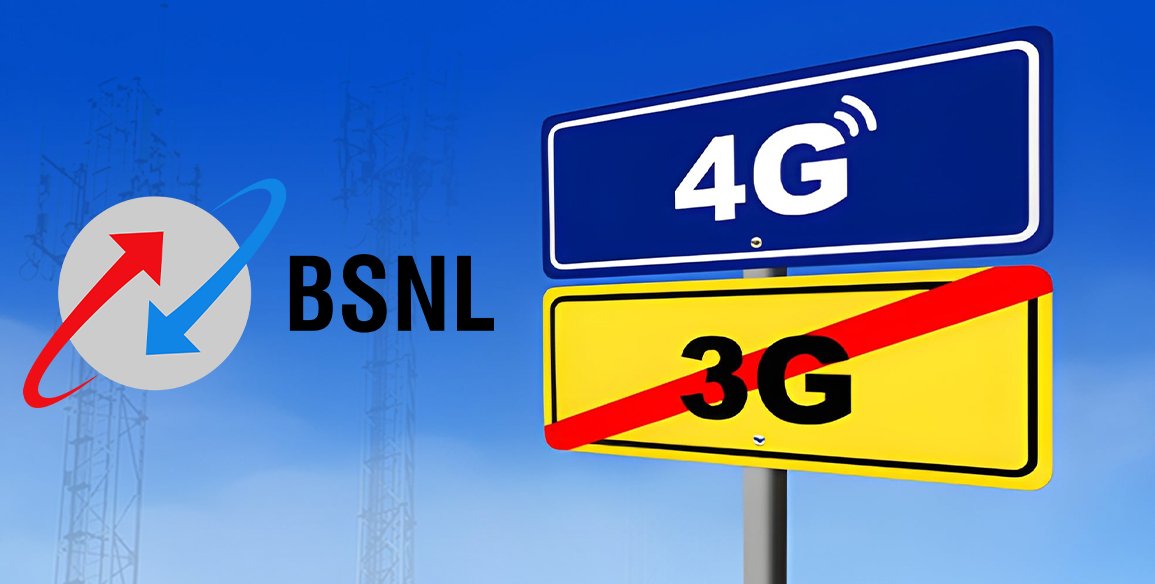
BSNL to shut down 3G nationwide as it shifts focus to 4G network expansion
 Facebook
 Twitter
 LinkedIn
 WhatsApp
Summary: BSNL plans to retire 3G services and end legacy vendor contracts to strengthen its 4G network.
State-run telecom operator Bharat Sanchar Nigam Ltd (BSNL) is moving ahead with plans to shut down its 3G mobile services across India as part of a major push to focus fully on its 4G network. The company has also decided to terminate annual maintenance contracts with equipment vendors for 3G sites, a step that will cut costs but could disrupt service for users still on older connections.
In internal letters to its circles, BSNL has authorised field teams to switch off 3G where feasible so the company can reallocate the valuable 2100 MHz spectrum entirely to 4G services. This band is important for faster and more stable mobile data performance, especially in towns and cities.
At present, BSNL’s total subscriber base is around 92.2 million, but only roughly 22 million are on 4G. A large share of the remaining users still rely on 2G and 3G — so the transition will likely require many to upgrade to 4G-compatible handsets or SIM cards to continue using mobile data without interruption.
The company’s 4G network has already grown rapidly, with over 97,000 towers installed nationwide. By turning off 3G, BSNL wants to make the network more stable, speed up data transfer, and lower costs like those for power and maintenance.
However, analysts warn the transition won’t be smooth for all users. Many older phones can’t support 4G bands, meaning customers may lose service unless they switch devices or fall back to 2G, which BSNL will continue to operate.
The move is part of BSNL’s broader strategy to modernise its infrastructure and remain competitive in India’s fast-evolving telecom market, where rivals have long since phased out 3G and moved into 4G and 5G technologies.